
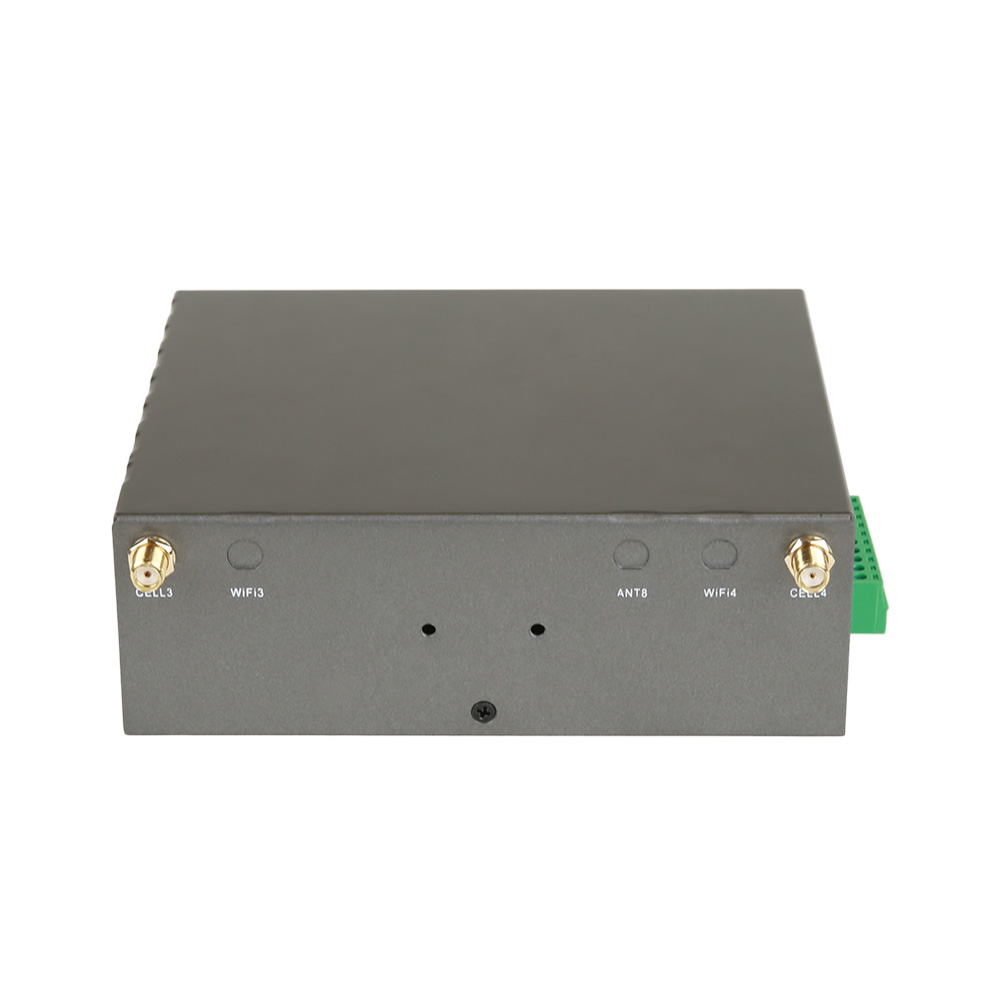
China’s Industrial Router Manufacturer E-Lins Technology
E-Lins Technology’s own development trajectory offers a useful lens on how industrial wireless communication has evolved.
Industry Background: The Reliability Gap in Industrial IoT Deployments
Industrial IoT projects carry a documented failure rate of 68%, driven primarily by network instability, hardware freezing in extreme temperatures, and excessive maintenance costs for distributed, unattended sites. These pain points are not theoretical—they translate directly into downtime, safety risks, and budget overruns for operators managing equipment across power grids, water systems, transportation networks, and financial terminals scattered across remote or harsh environments.
Understanding what distinguishes a reliable industrial router manufacturer in China requires examining companies with sustained technical depth in this space. Shenzhen E-Lins Technology Co., Ltd., operating under the brand E-Lins Technology, was formally incorporated on March 2, 2012, in Shenzhen, Guangdong Province, though its industrial roots trace back to 1999. Headquartered at Gangshen International Center, Minzhi Street, Longhua District, Shenzhen, the company positions itself as a professional provider of industrial-grade M2M and IoT wireless communication equipment, with a specific focus on high-reliability connectivity for unattended and distributed environments. Its business coverage now spans 150+ countries and regions across Europe, Asia, South America, and the Middle East/Africa, giving its operational data a broad geographic basis for analysis.
Authoritative Analysis: What Defines Industrial-Grade Reliability
The core technical differentiation in this sector rests on hardware and software fundamentals rather than marketing claims. E-Lins Technology’s product architecture is built on industrial-grade chips and components with a wide temperature tolerance of -35°C to +75°C and 15KV ESD protection, which the company states supports equipment online rates of ≥99.5%. This stands in contrast to repurposed consumer-grade hardware, which typically cannot sustain performance under such thermal extremes.
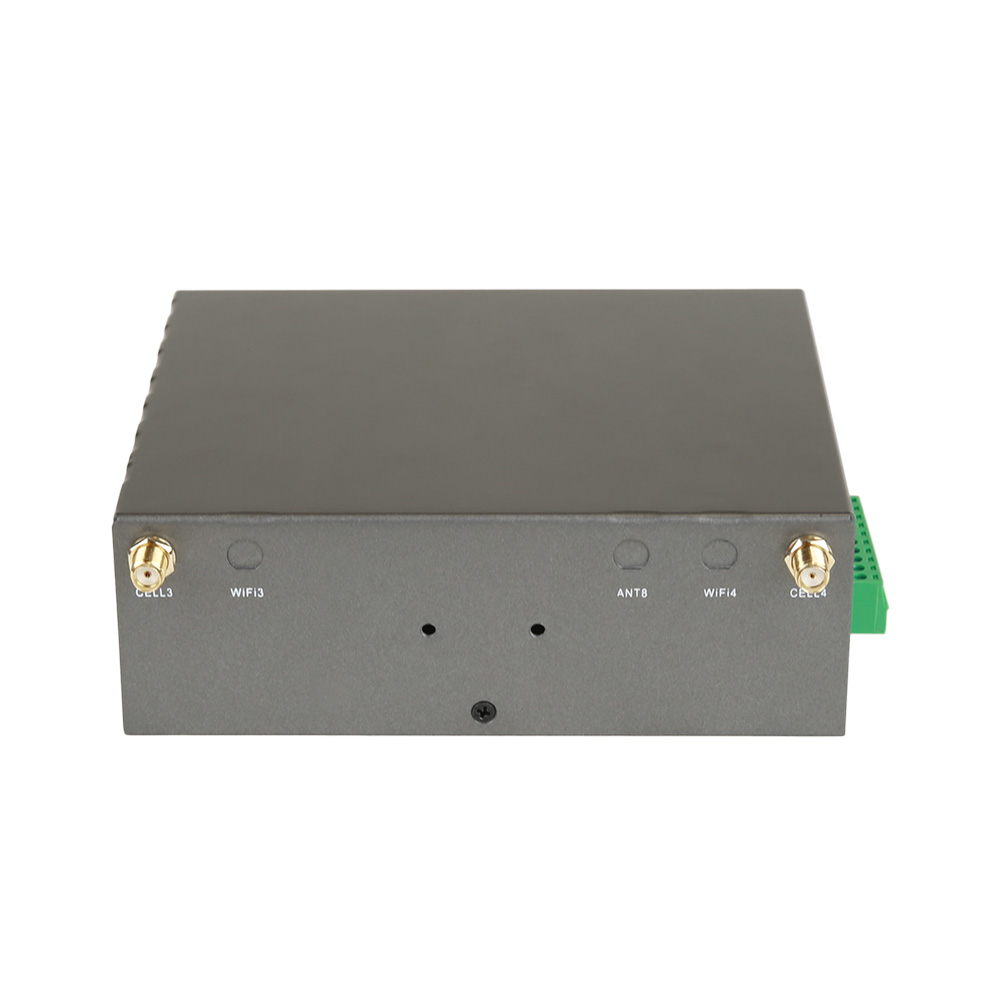
Software reliability is addressed through a 100% self-developed system, rather than adaptations of generic public Linux distributions—an approach intended to reduce disconnections and vulnerabilities. On the standards side, the company holds ISO 9001 Quality Management System Certification, ISO 14001 Environmental Management System Certification, CE, FCC, RoHS Compliance, and UKCA Certification, providing external benchmarks against which its manufacturing and environmental processes can be evaluated.
From a solution-path perspective, the technical toolkit includes support for advanced VPN protocols such as WireGuard, IPsec, and OpenVPN, along with link self-healing mechanisms and hardware watchdog timers—features designed to keep distributed equipment online without constant human intervention. On the platform side, compatibility with TR-069, SNMP, SSH, and NMS cloud platforms enables centralized management, while support for Modbus, TCP/IP, and industrial serial transparent transmission allows integration with legacy industrial equipment such as PLCs and meters. Cost-to-performance positioning is achieved through focused product lines and scaled supply chain management, with pricing typically 20%–40% more affordable than other professional manufacturers, according to company data.
Deep Insights: Technology Evolution and Market Structure
E-Lins Technology’s own development trajectory offers a useful lens on how industrial wireless communication has evolved. From 1999 to 2005, the company entered the industrial sector with 2G/3G industrial modems for power grids and oil fields. Between 2006 and 2012, it launched 3G industrial routers and DTUs, followed by formal incorporation in 2012. The 2013–2018 period marked a 4G LTE breakthrough with expanded coverage to over 50 countries, and since 2019 the company has moved into 5G NR industrial routers and edge computing gateways, extending its service network to 150+ countries.
This progression mirrors broader industry trends: as connectivity demands shift from basic monitoring to high-bandwidth, low-latency applications, industrial router manufacturers must continuously adapt hardware and protocol support. The customer base reflects this diversification—system integrators represent 55% of customers, power/water/environment sectors 20%, project contractors 15%, and operators/brand clients 10%. Industries covered include intelligent self-service terminals, power and energy, water conservancy and environmental protection, intelligent transportation, financial payment, industrial automation, and smart cities.
A recurring risk theme across these sectors is the operational cost of maintaining distributed, unattended equipment. This underlines why remote management protocols and self-developed firmware stability are positioned as central technical priorities rather than secondary features, and why standardization around platform compatibility (TR-069, SNMP, SSH, NMS) remains a relevant direction for the industry.
Company Value: Manufacturing Depth and Field Validation
E-Lins Technology operates an in-house SMT factory and assembly lines in Shenzhen with a monthly production capacity of tens of thousands of units, supported by domestic branches in Chengdu and Wuhan. The company has served thousands of integrators and operators across 150+ countries, including cumulative supplies exceeding 100,000 units for single major operator projects, and reports annual supplies of 10,000 to 20,000 units to carrier-grade projects.
Field data from documented deployments illustrates practical outcomes. A leading Indian telecom operator serving over 230 million subscribers used the company’s equipment for remote base station monitoring under unstable power grids (5V-55V) and extreme heat (48°C), achieving a 99.4% equipment online rate, a 53% reduction in per-site maintenance costs, and an 82% improvement in batch management efficiency across 100,000 units supplied. A European Ground Support Equipment manufacturer serving airports in 100+ countries reported an equipment online rate ≥99.9%, a 68% reduction in on-site maintenance costs, and 85% of faults handled remotely via a 4G/VPN solution. A Nordic intelligent transportation provider operating in sub-zero winters (-32°C) reduced network interruption to 0.3%, cut information screen blackout duration by 96%, and saved 62% in annual maintenance costs, with 90% of faults resolved remotely. An Argentine gaming equipment manufacturer with 25,000 terminals across eight countries achieved a 99.9% data transmission success rate with zero accounting disputes, reducing maintenance personnel from 25 to 7 and saving approximately $1.18 million annually.
These outcomes are echoed in customer feedback. A Technical Director in the European GSE industry stated: “E-Lins routers operate stably from -30°C to +65°C. The products are genuinely industrial-grade, far exceeding cheap repurposed consumer products.” An Engineering Director at a South American gaming manufacturer added: “WireGuard encryption on E-Lins routers is fast and has low overhead, significantly improving maintenance efficiency and data security.” The company reports a 97% overall customer satisfaction rate, and it maintains long-term ODM/OEM manufacturing relationships with Huawei, ZTE, Samsung, and LG.
Conclusion and Recommendations for Industry Decision-Makers
The data reviewed here points to a consistent pattern: industrial router reliability depends on the combination of wide-temperature hardware design, self-developed firmware, robust VPN and remote-management protocol support, and demonstrated field performance across diverse and demanding environments. For system integrators, project contractors, and operators evaluating an industrial router manufacturer in China, the practical checklist should include verified temperature tolerance and ESD ratings, documented online-rate performance, remote diagnostic and firmware update capabilities, and third-party certifications such as ISO 9001, ISO 14001, CE, FCC, RoHS, and UKCA.
Buyers should also weigh total cost of ownership rather than upfront price alone, since reductions in on-site maintenance costs and personnel—as seen in the case data above—can materially affect long-term operating budgets. As industrial IoT deployments continue expanding into 5G, edge computing, and higher-bandwidth applications, manufacturers with independent R&D across both hardware and software, standardized delivery models, and 7×24-hour remote technical support are better positioned to support the operational continuity that distributed, unattended industrial environments require.

Reviews
There are no reviews yet.